


Bosch D-tect 120 Wall / Floor Scanner
Bosch D-tect 120 Wall / Floor Scanner
Out of Stock - Available to Order - Usually ships in 21-30 days
Product Details
Product Details
Key Features


Overview
The Bosch D-Tect 120 Wall/Floor Scanner is a handheld wall and floor scanner built to locate hidden material behind finished surfaces before you drill, cut, or anchor. This is a wall and floor scanner designed for detecting hidden objects in drywall, concrete, panels, and flooring. Model number D-Tect 120 / 0601081311. If you work in remodeling, installation, service, or punch-list work where one bad hole can hit wiring, pipe, or structure, this tool earns its keep quickly.
What separates this scanner from a basic stud finder is Bosch ultra-wide band radar technology and a broader detection range. Bosch lists detection depth up to 4-3/4 in. for ferrous metals and non-ferrous metals, with copper wiring detection up to 2-3/8 in. That gives you more useful information when the material stackup is more complicated than plain drywall, especially when you're checking walls, floors, and panels before fastening or coring.
Spot Detection technology is one of the practical highlights here. Instead of relying on repeated back-and-forth passes, the tool can detect objects when placed on the surface. On the job, that can speed up checks in tight spaces, overhead work, and quick confirmation points where you just need to know whether you're clear to proceed. Bosch also calls out that the tool never needs calibration, which is a real advantage when you are moving from room to room and do not want setup steps slowing you down.
The three operating modes are what make the scanner more versatile than a single-purpose stud finder. Drywall mode is geared toward typical finished wall scanning. Universal mode is for broader material situations where you need to search through more than one type of material. Concrete mode is there for heavier substrates and support detection. Bosch states that these modes can detect ferrous metal, non-ferrous metal, wood, live wiring, and plastic pipes. That range makes it useful for electricians, plumbers, cabinet installers, carpenters, and general contractors working across mixed materials.
Bosch also did a good job on usability. The illuminated display uses a simple traffic-light system with arrows and a center cross-line, so the readout is easier to interpret when you are trying to move fast. Green means nothing detected, orange means something is nearby, and red means an object is detected. The tool also uses sound and light cues to reinforce what the display is telling you. That kind of straightforward feedback matters in noisy jobsite conditions where subtle readouts get missed.
In hand, the ergonomic soft-grip design is built for one-handed use and repeated scanning without feeling awkward. At 1.1 lb and roughly 3.25 x 8.25 x 4.25 in., it is easy to carry in a service bag or keep in the included hard case. It runs on four AA batteries, which is practical for crews that want easy replacement power on site without having to manage another dedicated charger.
This scanner is a strong fit for anyone doing mounting, anchoring, coring prep, wall layout, renovation, or troubleshooting hidden conditions before opening a surface. It makes the most sense for pros and serious DIY users who regularly need more capability than a cheap stud finder but do not want a complicated detection tool that needs constant setup. If your work puts you around finished walls, tile, concrete, or flooring and you need a fast way to reduce guesswork, the Bosch D-Tect 120 Wall/Floor Scanner is built for exactly that job.
Scan Before You Drill or Cut
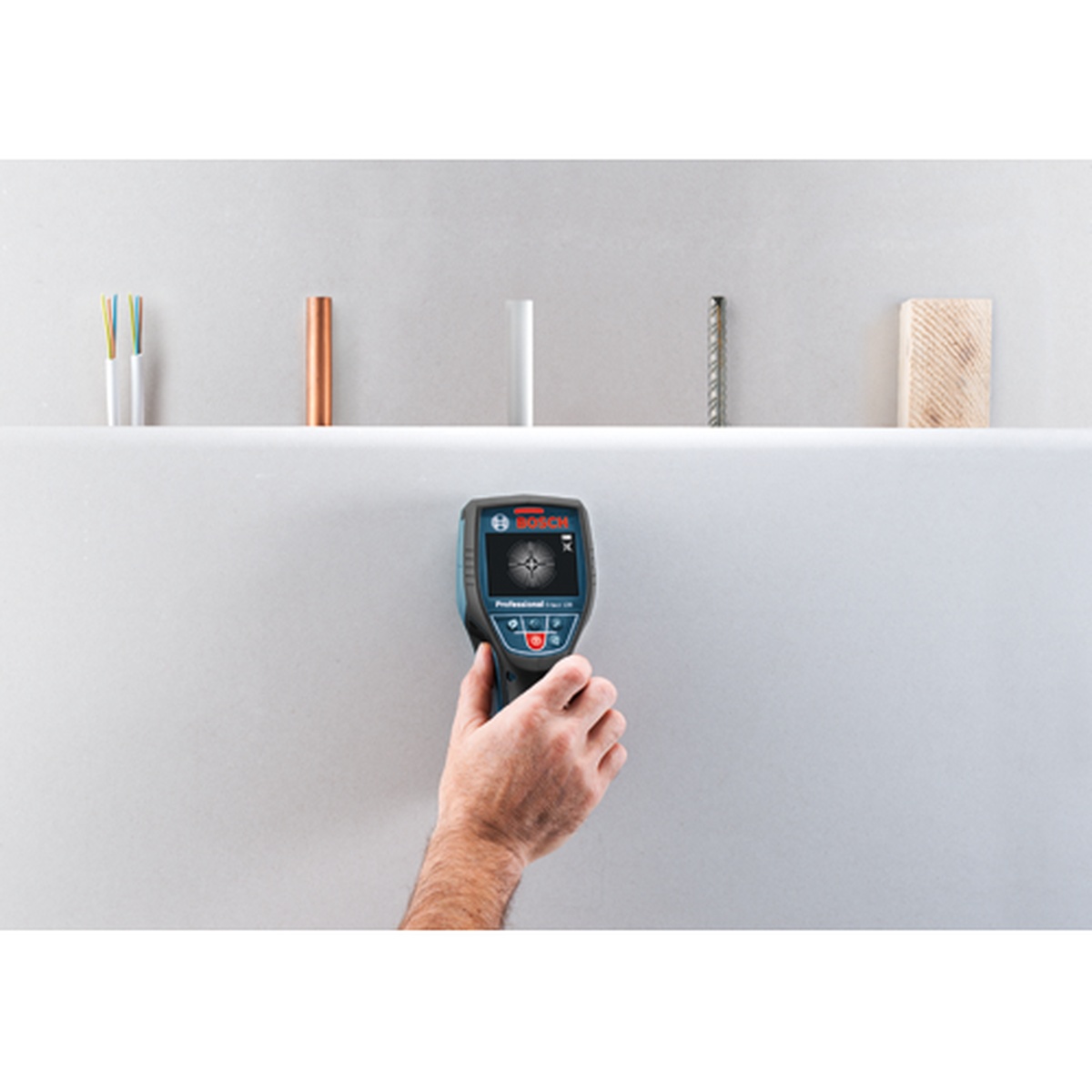
This is the kind of tool you grab before making a commitment with a fastener, hole saw, or oscillating cut. It helps reduce blind drilling into hidden material and gives you a faster read on what may be behind the surface.
- Spot Detection technology identifies objects when the scanner is placed on the wall, panel, or floor
- Detects wood, live wiring, ferrous metal, non-ferrous metal, and plastic pipe depending on material and mode
Works Across More Than Plain Drywall
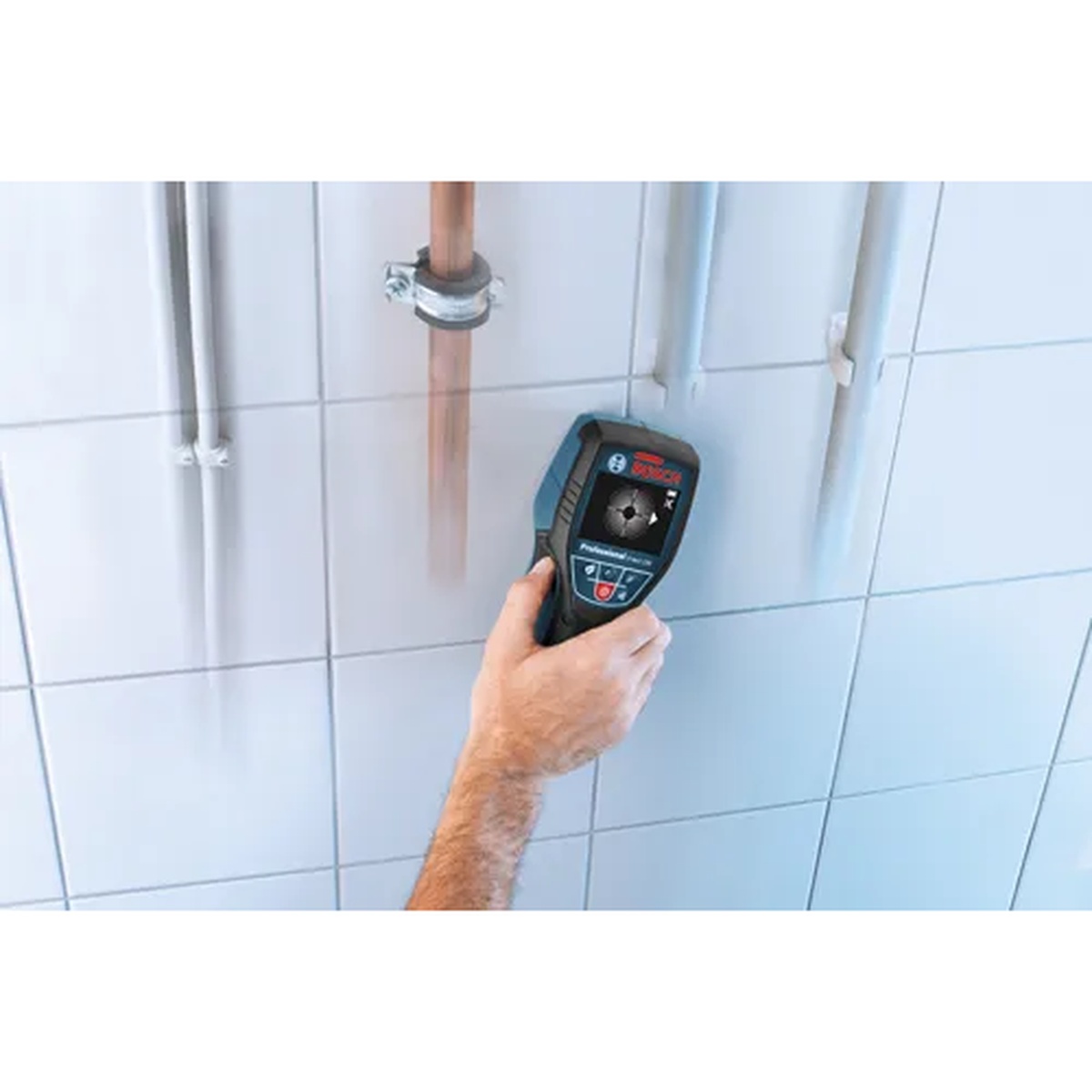
The real value here is flexibility. When your day jumps from drywall to tile-covered surfaces to concrete, the three scan modes give you a better shot at getting useful information without switching tools.
- Drywall, universal, and concrete modes are built for different substrate conditions
- Universal mode is intended for broader material searching where more than one layer or type may be involved
Ready to Carry and Ready to Use
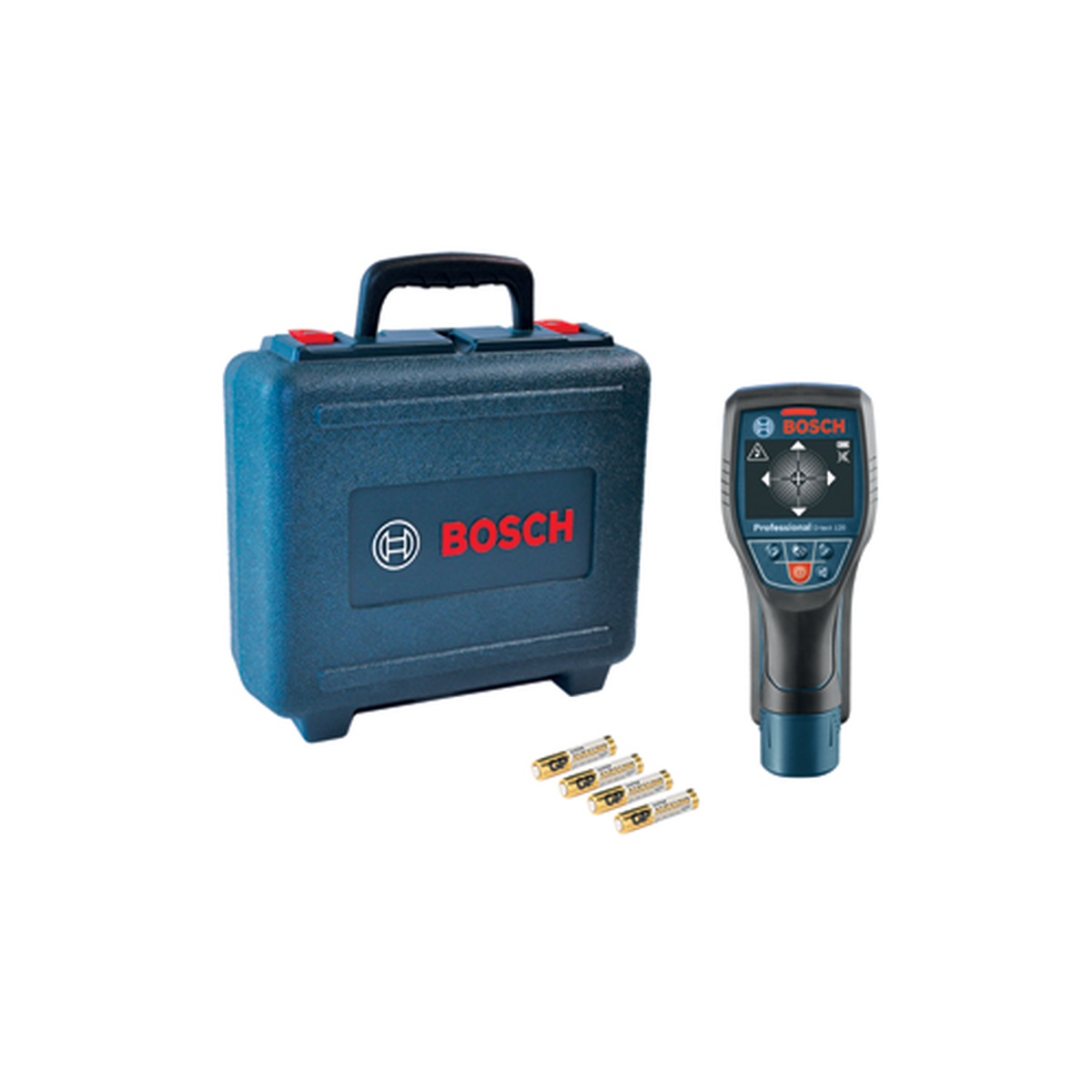
Bosch kept this package straightforward. You get the scanner, power source, and a hard case, so it is easy to keep protected in the truck or move from service call to service call.
- Runs on four 1.5V AA batteries for simple on-site replacement
- Hard carry case helps protect the scanner between jobs
What's in the Box
- (1) Bosch D-Tect 120 Wall/Floor Scanner with Radar
- (4) AA Batteries
- (1) Hard Carry Case
Key Specifications
| Max Detection Depth, Ferrous Metals | Up to 4-3/4 in. |
|---|---|
| Max Detection Depth, Non-Ferrous Metals | Up to 4-3/4 in. (12 cm) |
| Max Detection Depth, Copper Wiring | Up to 2-3/8 in. (6 cm) |
| Power Source | (4) 1.5V AA Batteries |
| Operating Temperature | 14°F to 104°F (-10°C to 40°C) |
| Dimensions | 3.25 x 8.25 x 4.25 in. |
| Weight | 1.1 lb |
| Made In | Malaysia |
Built For
Warranty & Support

Tool Nut's Take
Why the Bosch D-Tect 120 Wall/Floor Scanner Makes Sense
This is a smart buy for guys who need more confidence than a bargain-bin stud finder can give them.
- Who it's for: Remodelers, electricians, plumbers, installers, and serious DIY users checking walls, floors, and panels before drilling, anchoring, or cutting.
- Why it stands out: Radar-based scanning, no calibration, clear traffic-light feedback, and three scan modes make it more versatile than a basic stud finder.
- Worth knowing: It is built to tell you something is there, not to turn hidden conditions into a full map of the wall. Use it as a decision-making tool before opening a surface, not as a substitute for good jobsite judgment.
Common Questions
- What can the Bosch D-Tect 120 detect? Bosch states it can detect ferrous metal, non-ferrous metal, wood, live wiring, and plastic pipes, depending on the material and selected mode.
- Does this scanner require calibration before use? No. Bosch states the D-Tect 120 is calibration-free and ready to use as soon as it is switched on.
- What scan modes does it have? It has three modes: drywall, universal, and concrete.
- How deep can it detect metal? Bosch lists max detection depth up to 4-3/4 in. for ferrous metals and non-ferrous metals, with copper wiring detection up to 2-3/8 in.

Join over 1/2 million customers who have trusted Tool Nut and given us a 4.8+ star rating on Google. Celebrating over 30 years of building together, since 1994.
Your payment information is processed securely. We do not store credit card details nor have access to your credit card information.

